INFOMATIONAbout House tour and move-in

Live with Japanese People
- JP
- EN


Founder Interview Part 1|From the U.S. to Japan: The Life Experiences Behind Come on UP
2020-03-07
Come on UP was founded in 2006, when the idea of a “share house” was still relatively unfamiliar in Japan. Today, we operate international share houses across Tokyo, Yokohama, Osaka, and Kyoto, bringing together people from Japan and around the world.
But where did the idea come from?
Long before founding Come on UP, CEO Yasuko Nagase had already experienced shared living, cultural differences, and life overseas firsthand. Her journey took her from Japan to the United States, through one of the most dramatic moments in modern history, and eventually back to corporate life in Japan.
In Part 1 of this interview, we look at the experiences that shaped the person behind Come on UP.
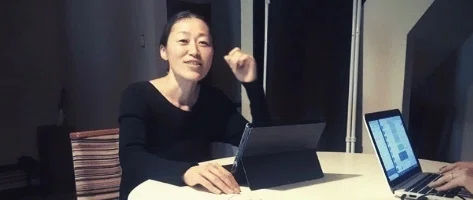
Q. What were your student years like?
A. I moved to the United States at 16—and sharing a home with others became completely normal to me.
Yasuko moved to the United States when she was 16 and spent around eight years there. After high school, she attended the University of Southern California, where she studied Management Information Systems.
One of the biggest differences she noticed was that living with people outside your family was much more common in the U.S. She lived with roommates herself, so sharing kitchens, living spaces, and everyday life with other people never felt unusual.
Years before “share house” became a familiar term in Japan, shared living was already part of her everyday experience.
For many international residents in Japan today, this may feel familiar. You may have lived with roommates during university, a working holiday, or while studying abroad. But in Japan at the time, this style of living was still far less common.
“What Do You Think?”—A Different Style of Education
Another culture shock came from school. Rather than simply remembering information, students were expected to express opinions, ask questions, and participate in discussions.
For Yasuko, this was very different from the educational environment she had known in Japan. A teacher once pointed out that although she studied seriously, she needed to ask more questions.
That experience gradually taught her that having your own perspective—and being willing to express it—has value.

Q. Was There a Major Turning Point in Your Life?
A. 9/11 changed how I thought about life.
After university, Yasuko entered the technology industry during the dot-com boom. At the time, she was living in New York and working close to the World Trade Center area.
Then came September 11, 2001.
She was preparing to go to work when the attacks occurred. Being physically close to such a historic tragedy forced her to confront something she had never seriously considered before:
Life can change—or end—without warning.
That experience changed her priorities. Instead of focusing only on career success overseas, she began thinking about what she would regret if her life suddenly ended.
One of the biggest realizations was that she wanted to spend more time with and do more for her family. She eventually decided to leave the life she had built overseas and return to Japan.
Coming Back to Japan Brought Another Culture Shock
After living overseas for a long time, returning to your home country does not always feel like simply “going home.” Sometimes, you see your own culture differently.
Yasuko returned to Japan in her early twenties and joined Panasonic. After years in the U.S., corporate Japan felt surprisingly new.
Hundreds of new employees joined at the same time. People dressed similarly, and there were strong expectations about how employees behaved. Instead of simply adapting, Yasuko became curious about how far she could challenge those expectations.
She deliberately dressed differently and even experimented with increasingly unconventional hair colors. Rather than being punished for standing out, she found herself in a company beginning to think more seriously about diversity.
Q. What Did You Do at Panasonic?
A. I was given a role where challenging existing systems was part of the job.
Her international background and willingness to speak openly became useful. Rather than simply following established practices, she was encouraged to question them and look for things that could be improved.
That attitude extended beyond formal work. She also questioned unwritten social customs inside the company when they felt outdated or unfair.
In other words, the habit she had developed in the U.S.—“Why do we do things this way?”—followed her back to Japan.
Shared Living Was Never Just About Housing
Looking back at Yasuko’s early life, it becomes easier to understand why Come on UP eventually became an international share house company.
Living with roommates overseas, learning to express different opinions, experiencing a life-changing event, returning to Japan, and questioning accepted norms all point toward one idea:
The people around us can change the way we think and live.
That idea remains visible in Come on UP today. Residents come from Japan and overseas, with different professions, cultures, lifestyles, and experiences.
A share house, in that sense, is not simply a cheaper room. It can also become a place where someone you would never normally meet becomes part of your everyday life.

What Happened Next?
By this point, Yasuko had lived abroad, returned to Japan, and worked inside one of the country’s best-known corporations. But she had not yet started a share house company.
So how did these experiences eventually lead to the founding of Come on UP in 2006?
That story continues in Founder Interview Part 2.


 Instagram
 Twitter
 Facebook
 Note
多様性を楽しみ、ゆったり暮らす。
シェアハウスならカモンアップ
©2022 Come on up inc.