INFOMATIONAbout House tour and move-in

Live with Japanese People
- JP
- EN


Founder Interview Part 3|A Rough Start, Hitting Rock Bottom, and Opening Our Second Share House
2020-03-21
Good evening! I’m Yasuko Nagase, founder and CEO of Come on UP, one of the early pioneers of international share houses in Japan. Back in 2006, when the idea of a “share house” was still unfamiliar to many people in Japan, I started my own company. This is Part 3 of my story.

A Major Failure Right After Launch
At the time, I had absolutely no experience or know-how when it came to running a company.
There is a Japanese saying, “Three heads are better than one,” so I thought it would be reassuring to start the business with other people. I invited two friends to join me, and the three of us launched the company together.
But it turned out to be a major mistake.
I had completely failed to think about one simple reality: if three people are running the company, the business needs to earn enough to support three people.
Embarrassingly, not long after starting the company, I realized that the numbers simply did not work.
I had to sit down with my two friends and say:
“I’m sorry. This isn’t going to work. I’m really sorry, but we have to stop.”
Telling them we had to disband the team was one of the hardest moments of my life.
That painful experience taught me the importance of cash flow. When does money come in? When does it go out? Revenue might arrive a year from now, but there could be nothing coming in for the next two or three months.
These were things I should have planned carefully before starting the business. Instead, I rushed ahead and had to learn the lesson the hard way.

Hitting Rock Bottom
I had left Panasonic to start a business with friends who believed in my dream. But because my financial planning had been too optimistic, I could not pay the fees I had promised them.
I was overwhelmed by guilt.
“Because of me, I changed the course of my friends’ lives.”
I ended up withdrawing from the outside world and spending most of my time inside the newly opened share house in Ebisu.
What saved me, though, was the fact that I had housemates around me.
Simple daily interactions like:
“Good morning.”
“Welcome home.”
helped me maintain at least a basic connection with the outside world.
There were all kinds of people in the house. Some were cheerful and carefree. Others would say:
“I made extra food. Want to eat together?”
Because they were there, I was able to keep some sense of myself.
In that sense, I really believe the share house itself saved me.
As I spent more time in that warm and peaceful environment, I gradually started thinking:
“This really is a good place. Maybe I wasn’t wrong after all.”
That gave me the motivation to try again.

Starting Again and Opening Our Second House
Around that time, a relative’s house in Kichijoji became vacant.
The elderly owners could no longer manage the property, so they had tried to sell it. But it was not selling, and demolishing the house also seemed like a waste.
Then I thought:
“Maybe this house could become a share house. If it starts generating rental income, it could also help support the owners with their care expenses.”
So I decided to give it another try.
Because I had only just started the company, banks were not willing to lend me money. Instead, I borrowed money from relatives and began renovating the property.
It was a complete restart from rock bottom.
The feelings I had at that time are still deeply engraved in me as a reminder of where everything began.
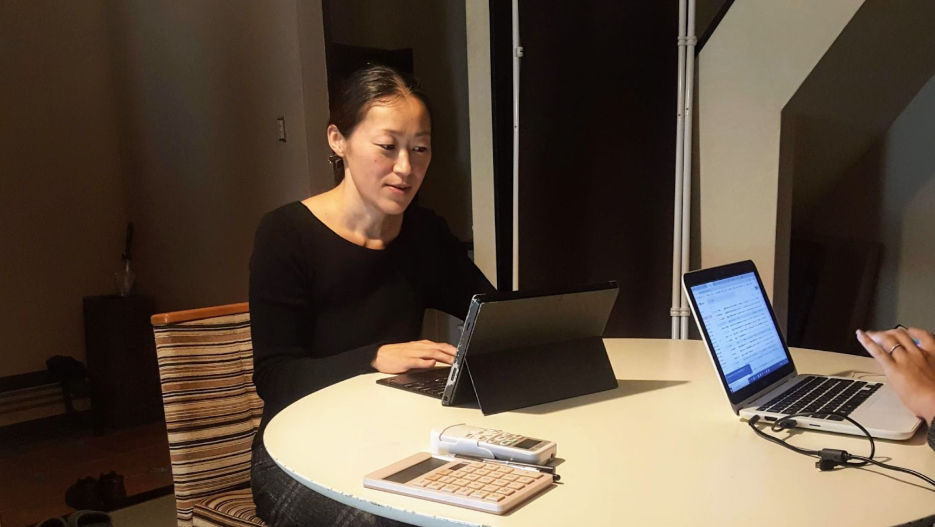
It’s currently moving season in Japan, and the Come on UP team is busy every day with inquiries, house viewings, and new move-ins.
If you’re thinking about starting a new life in Tokyo, Yokohama, Osaka, or Kyoto, feel free to take a look at our share houses and see what kind of community might fit you.


 Instagram
 Twitter
 Facebook
 Note
多様性を楽しみ、ゆったり暮らす。
シェアハウスならカモンアップ
©2022 Come on up inc.