INFOMATIONAbout House tour and move-in

Live with Japanese People
- JP
- EN

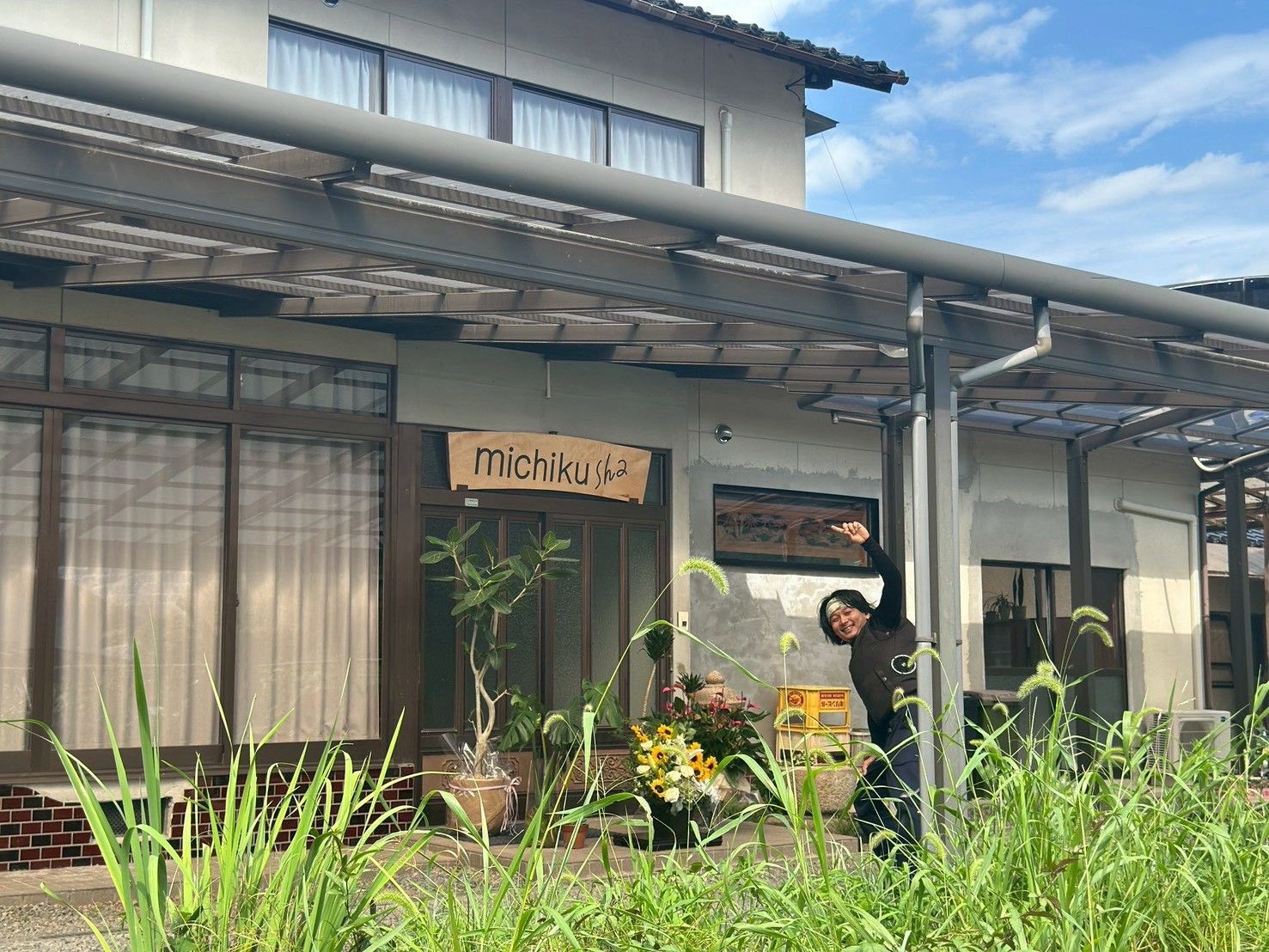
Why Not Take a Little Detour?
2026-08-17
Sometimes, Life Needs a Detour Too
One of the most important ideas behind michikusha is the Japanese word:
michikusa.
Literally, it refers to wandering off the direct route — taking a detour instead of heading straight toward your destination.
Every day, we are encouraged to be efficient.
Get where you are going as quickly as possible.
Avoid wasting time.
Move forward without unnecessary stops.
From that perspective, taking a detour can seem pointless.
But K believes those moments matter.
You go to a hot spring and somehow end up talking to the stranger next to you.
You take a walk and notice a flower growing beside the road.
You follow a street you had never planned to walk down and discover a view you did not know existed.
None of those things would have happened if you had taken the fastest possible route to your destination.
And yet those little detours can lead to meeting someone new,
learning something unexpected,
or seeing something in a slightly different way.
Perhaps travel works the same way.
Travel is not only about checking every famous destination off a list.
It can also mean walking through a town you know nothing about.
Talking with local people.
Or spending time doing absolutely nothing.
Sometimes, those unplanned moments become the memories that stay with us the longest.
At michikusha, you do not need to be doing something special all the time either.
You can spend time in the garden or fields.
Have a BBQ together.
Watch a film on the projector.
Or simply sit around and do nothing for a while.
Spending the day according to how you feel.
That kind of time might be the most michikusa-like experience of all.
It’s Okay to Have Time When You Don’t Try So Hard
K says that since childhood, he grew up in an environment where “trying hard” was always close at hand.
Aim higher.
Work harder.
Achieve more than the people around you.
Living in that kind of world could sometimes feel difficult.
Through his work as a gardener and his experiences overseas, however, he gradually began to think:
“Maybe I don’t have to keep competing forever.”
You do not always have to compare yourself with other people.
You do not have to define yourself only through how others see you.
If you are tired, you can stop.
It is okay to take the longer route sometimes.
That feeling is also part of the name michikusha.
Rather than being a place that tries to teach its guests something, it is a place where, simply by spending time there, meeting people, and being surrounded by nature, someone might think:
“Oh, people can live like this too.”
or,
“There are other ways to spend my time.”
And perhaps one more possibility opens up inside them.
That is the kind of guesthouse michikusha hopes to become.
About 80% DIY — A Guesthouse Built Together With Many People
When you visit michikusha, make sure to take a close look at the building itself.
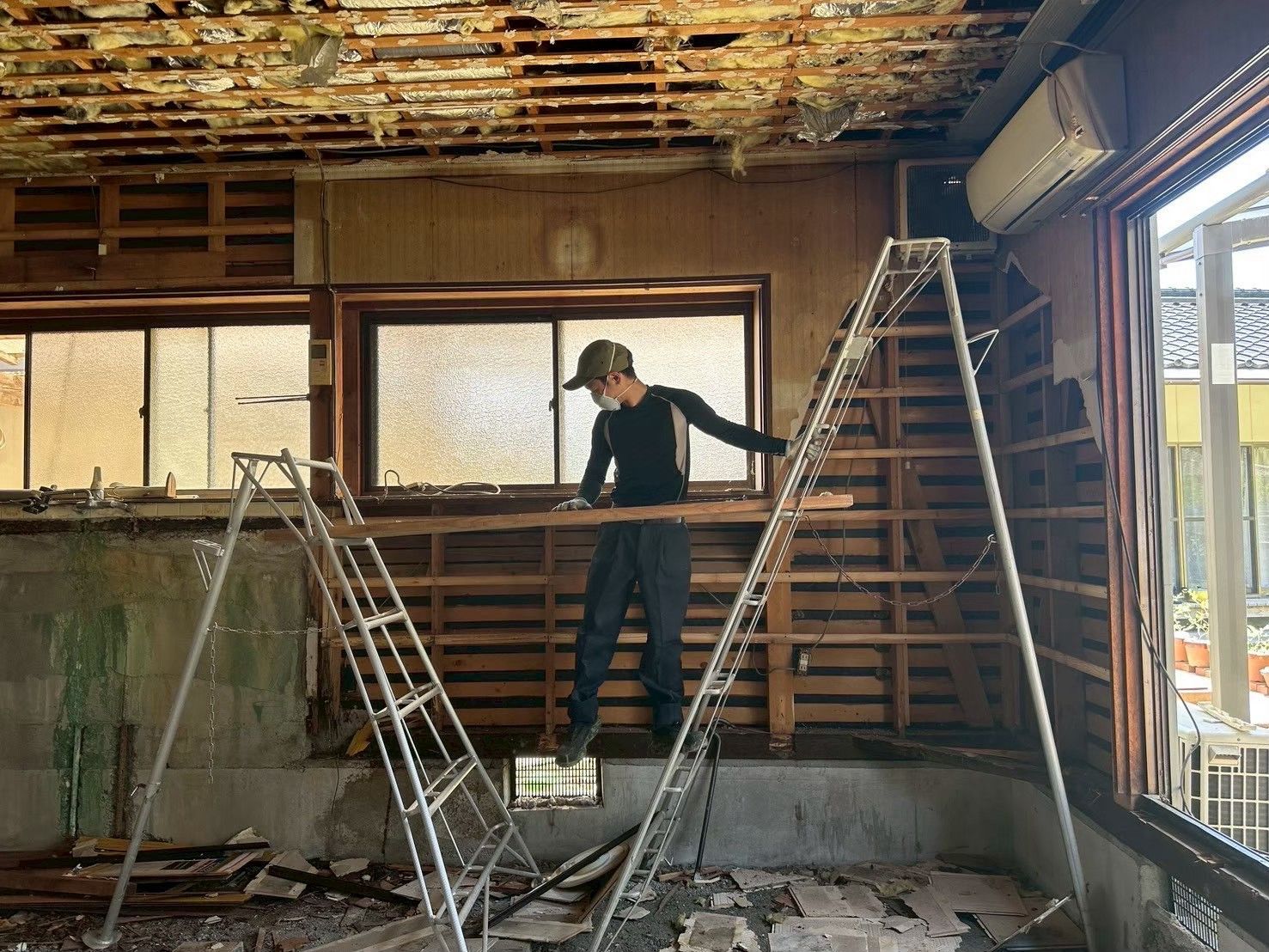
Around 80% of the guesthouse was created through DIY work.
K originally worked as a gardener and has always enjoyed working with tools and making things.
But michikusha is not a guesthouse K built entirely by himself.
His partner, people from the local community, carpenters, and many others helped along the way.
Together, they gradually transformed the building into what it is today.
Of course, doing everything yourself is not necessarily the goal.
There are things you can do on your own.
And there are things that are better left to professionals.
K and the people around him worked out where that boundary was, consulting with others and building the space step by step.
The walls.
The floors.
Each of the rooms.
None of them arrived already finished.
That means the space carries not only K’s touch, but traces of the many people who were involved in bringing michikusha to life.
It is different from a perfectly finished hotel.
It is a place people thought about together.
A place where people asked for help.
A place shaped little by little through many pairs of hands.
Knowing that story might change the way you see the guesthouse when you stay there.
Welcoming Visitors as a Whole Community, Not Just One Guesthouse
When you start a guesthouse, it is natural to think:
“How can I get more people to stay at my place?”
michikusha is still a business, so of course that question matters.
But one thing that stood out in K’s story was that he does not see other accommodation providers only as competitors.
If michikusha cannot host someone, he can introduce them to another place nearby.
And another accommodation provider might send a guest to michikusha.
By connecting with the tourism association and people working throughout the area, K is thinking beyond a single guesthouse toward something larger:
welcoming visitors as a whole community.
In the future, he also hopes to connect the guesthouse more closely with local food, wild game, and other experiences that are unique to Maniwa.
Rather than simply saying,
“Please come stay at michikusha,”
the message might be closer to:
“Come and visit Maniwa — and while you’re here, stay at michikusha.”
Come on UP and K
This was not actually the first time K and Come on UP had crossed paths.
We first met around two years ago.
Through connections that had grown out of the Come on UP share house community, we met during a workation project held in Maniwa.
Even back then, K was already saying:
“Someday, I want to create my own guesthouse.”
Since then, he continued working in Maniwa.
He met people in the community.
He found the house.
And with the help of his partner, local residents, carpenters, and many others, he gradually created the guesthouse.
Eventually, michikusha really opened its doors.
Listening to his story during this month’s study session made me realize again that there are many different ways to create a place of your own.
You could open a guesthouse in a city where people already gather.
Or you could enter a community,
build relationships with the people who already live there,


 Instagram
  Twitter
  Facebook
  Note
Note 多様性を楽しみ、ゆったり暮らす。
シェアハウスならカモンアップ
©2022 Come on up inc.